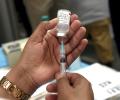
The first 100 beneficiaries of such foreign vaccines shall be assessed for seven days for safety outcomes before it is rolled out for further immunisation programme within the country, the Union health ministry said.
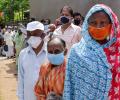
These 51 cases were detected from over 45,000 samples sequenced so far in the country.
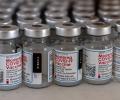
Currently, the country is using two 'made-in India' jabs -- Covishield and Covaxin -- to inoculate its billion-plus population and has administered 20 crore doses since launching the world's largest vaccination drive in mid-January. A third vaccine, Russian-made Sputnik V, has been approved by the government and is being used on a smaller scale at present.

Modi said India has taken an important step forward in protecting its youth population against the disease.

The PM-CARES fund, which has been set up to provide relief during the coronavirus pandemic, has contributed over Rs 2,200 crore for the first phase of vaccination drive, which is looking to inoculate frontline healthcare workers, the Expenditure Secretary said on Tuesday.

Some states have flagged the shortage of vaccines and expressed their inability to start vaccination of people above 18 years from Saturday
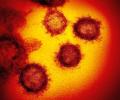
The WHO said that studies have highlighted that the spread of the second wave has been much faster than the first in India.

The first dry run of the vaccination drive took place across 125 districts covering all States/UTs on January 2. The dry run was also conducted to familiarise the state, district, block, and hospital-level officers on all aspects of the COVID-19 rollout.

The announcement comes a day after the Subject Expert Committee (SEC) on COVID-19 of the CDSCO recommended granting emergency use authorisation (EUA) to the COVID-19 vaccines Covovax and Corbevax with certain conditions.

22 cases of the Delta Plus variant of the coronavirus have been detected in India, with 16 of them being reported from Maharashtra and the remaining from Madhya Pradesh and Kerala, the government said.
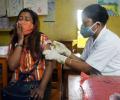
Several private hospitals across the country said they have no clarity on procuring COVID-19 vaccines under the new policy announced by Prime Minister Narendra Modi and that it has led to the vaccination being put on hold at their centres.
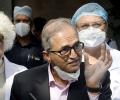
Among the other names tipped to make it to the Cabinet are Jyotiraditya Scindia, Sarbananda Sonowal, Baijayant Panda.
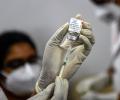
On Wednesday, the Maharashtra government had said that it would not be able to launch the 18-45 age group vaccination drive from May 1 due to the shortage of vaccines.

Millions of people across the country stayed indoors on March 22, 2020 in an unprecedented and overwhelming response to Prime Minister Narendra Modi's appeal for the nationwide curfew. People used to come out briefly at 5 pm to show their gratitude to healthcare and other essential service providers with sounds of bells, conches and claps.

Politics, bureaucracy, ineptitude, double-standards and an attempt to politicise the fight in pseudo-nationalistic terms have all hampered the fight against this deadly virus, says Vir Sanghvi.
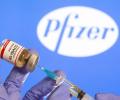
Providing data, it said UK's Public Health England has reported high vaccine effectiveness (87.9 per cent) against the B.1.617.2 variant, most reported in India, in an observational study (concluded on May 22, 2021).
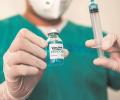
During the webinar, 'COVID-19: Vaccination and Potential Return to Normalcy - If and When', Dr Hotez, an internationally-recognised physician-scientist in neglected tropical diseases and vaccine development, said that the COVID-19 vaccine rollout is "India's gift' to the world in combating the virus.

'All the vaccines that are available in most countries, right now, are all highly effective and safe.'

Dr Mishra further explained the effect of hybrid immunity on the vaccinated population and said that it is likely to give protection to people along with the Indian vaccines administered.
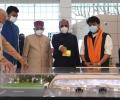
It is in no way a government of the economic Right. The Right is limited to religion and nationalism. The rest is as Left as the Congress or any other party, observes Shekhar Gupta.

Private hospitals can charge up to Rs 250 per dose of COVID-19 vaccine, official sources said on Saturday as India prepares to vaccinate people aged above 60 years and those over 45 with comorbidities from March 1.

Based on this price, state governments, private hospitals, industrial establishments, etc would be able to procure vaccine doses from the manufacturers.

India has airlifted more than 6 million COVID-19 doses to nine countries in Phase-I under its initiative termed "Vaccine Maitri".
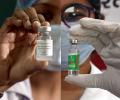
There were apprehensions in the SII about rival Bharat Biotech's 'indigenous' tag, opening up shortcuts for it. One senior person, who was very familiar with the sector, told me, 'The message has gone out from the very top. Somani (V G Somani -- drug controller general of India) has told me "Bharat ka karna hai".' A fascinating excerpt from Abantika Ghosh's Billions Under Lockdown: The Inside Story Of India's Fight Against COVID-19.

The Oxford vaccine, which also has a tie-up with the Serum Institute of India, was first administered to Brian Pinker, an 82-year-old Oxford-born dialysis patient. Pinker is among the first to be vaccinated by the Oxford University Hospital's (OUH) chief nurse, hailed as a major milestone in the phased vaccination programme being undertaken by the National Health Service (NHS).
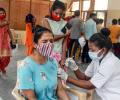
A June 11 survey by cLocalCircles across 299 districts puts overall vaccine hesitancy levels at 18 per cent, with 11 per cent of the respondents saying they were not convinced if the currently available vaccines would protect them against the new strains; and 5 per cent said they do not plan to take the vaccine at all.

The next phase of the COVID-19 vaccination drive for people above 60 years and those aged 45 and above with comorbidities will begin from March 1 and registration on the Co-WIN2.0 portal will open at 9 am on Monday.
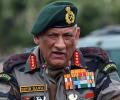
The Padma Bhushan was conferred on 17 personalities including N Chandrasekharan, chairman of Tata Sons, Krishna and Suchita Ella of Bharat Biotech, Cyrus Poonawalla, Satya Nadella, chairman of Microsoft, Sunder Pichai, chairman of Google.
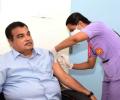
The Union government's role and the prices announced by the vaccine makers raises far too many disquieting questions, observes Prosenjit Datta.

As the global debate on booster shots gathers momentum, several scientists in New Delhi said the priority must be to ensure that more people are inoculated with at least their first jab.
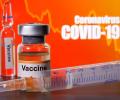
Over the last four days, the Indian arm of US pharmaceutical giant Pfizer, Pune-based Serum Institute of India and Hyderabad-based pharmaceutical firm Bharat Biotech have applied to the Drugs Controller General of India seeking emergency use authorisation for their COVID-19 vaccines.
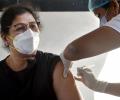
he immunity built from the vaccine does little to stop it from transmission, warns Dr Raj Agarwal. You may harbour the virus as a carrier, and be a source of infection to others who are less fortunate and haven't got a chance to get vaccinated yet.
With final preparations underway and the vaccine set to arrive in the national capital in the next couple of days, Rohit Datta, who was the first person to be diagnosed with coronavirus infection on March 1, said "it feels surreal".
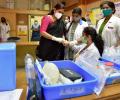
The first nationwide mock drill was held on January 2 which, the health ministry said, helped to iron out any glitches in the final execution and further refinement of the operational procedures.
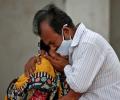
'We will see a kind of disaster which the country has not seen in the last 100 years.'

As India launched the world's largest vaccination drive against the coronavirus pandemic, showing the light at the end of a 10-month tunnel that upended millions of lives and livelihoods, here are some of the quotes from politicians across parties and other people who took the jab:
The Supreme Court has asked the Centre to place on record all relevant documents and file notings reflecting its thinking culminating in the COVID-19 vaccination policy, and the purchase history till date of all jabs including Covaxin, Covishield and Sputnik V.

The average rate of COVID-19 vaccination in the country has been 10.8 million per week. At that rate, it will take India till December 2024 to complete two billion doses.
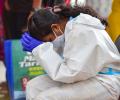
Not to say that India couldn't have handled the situation better, but on average, it didn't do anywhere near as badly as the naysayers make it out argues Rajeev Srinivasan.

Modi urged the country to show patience during the vaccination drive as it had shown till now in fighting the pandemic.
 © 2026 Rediff.com - Advertise with us - Disclaimer - Privacy Policy - Sitemap - Feedback - About us - Terms of use - Grievances